
Think about the homes where you’re happy to stay a little longer. There’s somewhere comfortable to sit, getting another drink is easy, and the conversation keeps going while dinner comes together. Those small comforts are good starting points for your own space.
You can begin with a whole-house plan or one corner that never quite works. The useful question is the same: what would make spending time here feel easier?
Start with the first few minutes
Someone arrives with a bag, a dish to share or a jacket over their arm. Give them an obvious place to put it. A small bench, a few well-placed hooks or a clear stretch of console can make the entrance feel ready for people.
Try walking in with your hands full. Where do you naturally pause? That is often a better guide than adding another decorative piece. Keep a little surface clear, make the path into the house easy to follow, and let the welcome happen there.
Let the kitchen join the conversation
People tend to find their way to the kitchen. Make room for that habit. A stool at the end of the island or a chair facing the cooking area gives someone a place to stay without standing in front of the drawer you need.
At Calle Tuberia, the island faces the living area. It is a simple relationship to notice: someone can be working in the kitchen while others settle nearby. In your own home, pull out the chairs and open the dishwasher before deciding that a route feels generous enough.
If a remodel is in your future, tell your team what usually happens when people come over. ‘Everyone stands here while I’m cooking’ is useful information. A good plan should make room for those familiar moments.
Give drinks an easy home
Water glasses, a coffee pot or a bottle opened for dinner do not all need to live in the middle of food preparation. A sideboard or a tray on a clear counter can give guests somewhere to help themselves.
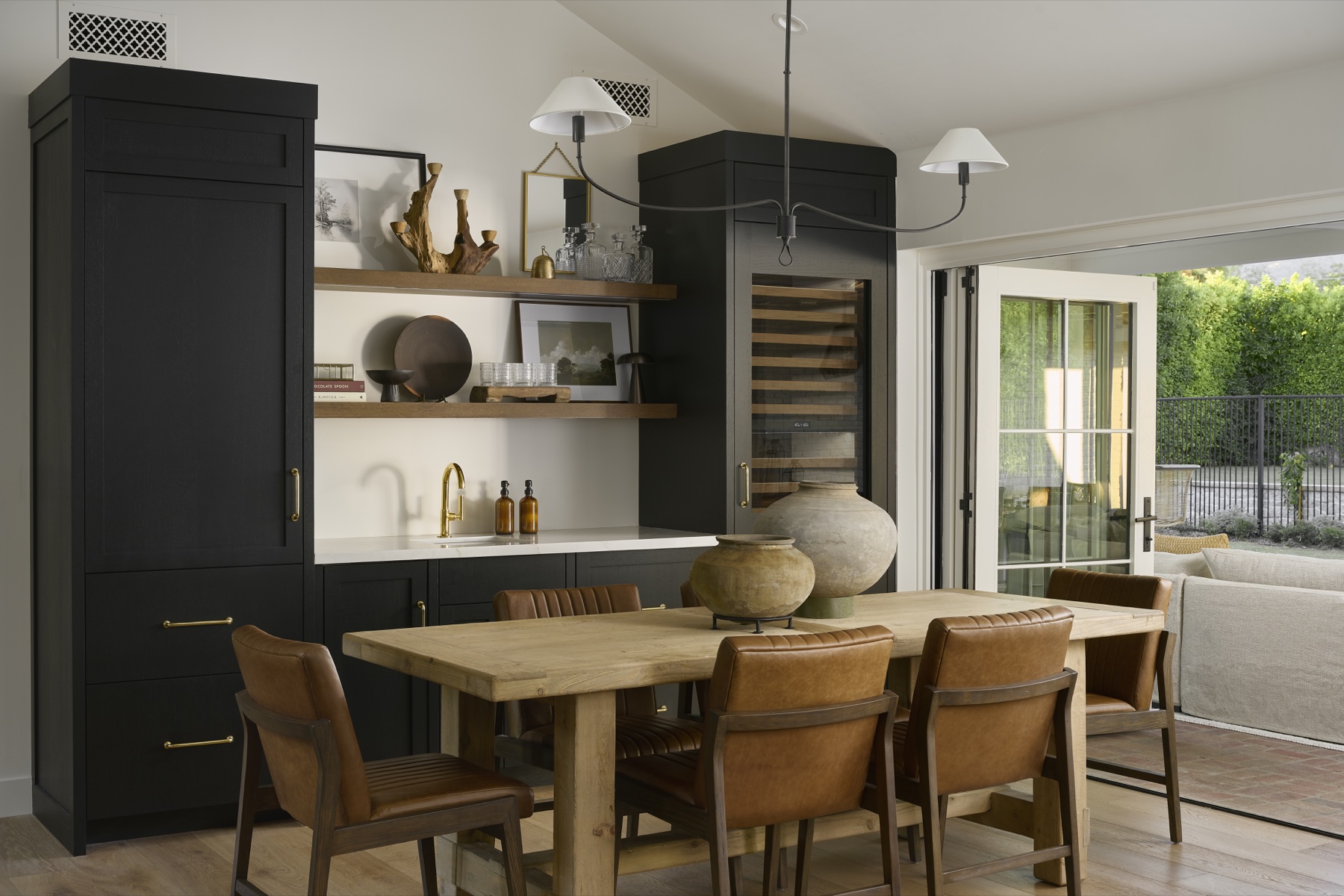
The Paisano Circle dining space places beverage storage beside the gathering area. You can borrow the idea without building an entire bar: keep the things used together close together, leave room to set down a glass, and put water where everyone can find it.
Choose the arrangement for the way you actually host. If coffee with a friend happens more often than a big dinner, that little everyday ritual deserves a good spot, too.
Make it comfortable to linger
A chair can look lovely and still be the one nobody chooses. Sit in it for a while. Is there somewhere for a drink? Can you talk to the person beside you without twisting around? A small table moved a few inches can change how that corner feels.
Look at the lighting from your seat. A lamp or a softer setting can make an evening feel more relaxed while leaving useful light where someone is finishing dinner. Keep music at a level that lets the conversation carry.
For a Phoenix patio, notice where the shade falls at the time you want to use it. A comfortable indoor option matters on hot days. Put a place for drinks beside the outdoor seating, and keep the route back to the kitchen clear.
Leave room for an ordinary day
The same details that welcome guests can make daily life nicer. An easy place for the bag dropped after work. A cupboard that holds the serving dishes where you use them. A chair near the window that is ready for a quiet cup of coffee.
Start with one small frustration. Clear the landing spot, move the lamp, bring the glasses closer to the table. Then live with the change for a week. The details worth keeping are the ones you stop having to think about.
A home becomes welcoming through those everyday choices. Make space for the routines and people you love, and let the room feel lived in.